penibility

Français
Innovation
Yes
Courriel du propriétaire ou de l'auteur
Voting
0%
Année de début
2017
Année de fin
2020
Brève description
<table border="0" cellpadding="0" cellspacing="0" style="width:467px;" width="467"> <tbody> <tr height="60"> <td height="60" style="height:60px;width:467px;">Le projet Extrafor a pour objectif de réduire la pénibilité du travail de bûcheron en créant un exosquelette adapté aux besoins de l'exploitation manuelle.</td> </tr> </tbody> </table>
Solution digitale
No
Résumé

Le taux de mécanisation pour la récolte des peuplements de feuillus n'est que de 10 % et la mécanisation en sylviculture est très limitée. L'utilisation d'exosquelettes en forêt permettrait d'assister l'opérateur dans son travail, de lui faciliter la tâche tout en visant à préserver sa santé, sans bien sûr remettre en cause sa sécurité. Il s'agit d'une solution hybride qui combine l'acuité du travail manuel avec la force et l'endurance d'une machine, tout en restant évidemment abordable. Doter le personnel de terrain d'exosquelettes ergonomiques, adaptés au travail en forêt, est une solution intermédiaire et complémentaire entre la mécanisation et le travail manuel, permettant de débloquer certaines situations difficiles. Chercher à augmenter la capacité humaine au lieu de la remplacer est aussi un moyen de répondre aux différentes attentes des citoyens (maintien des emplois en milieu rural, acceptabilité sociale des sites forestiers) et de valoriser le travail en forêt (et le secteur) en favorisant ce type d'initiatives.

Propriétaire ou organisation auteur
FCBA
Nom du propriétaire ou de l'auteur
Marin Chaumet
Nom du rapporteur
Henri Husson
E-mail du journaliste
Photo principale
Légende de la photo principale
Forestier travaillant avec un exosquelette
Logo de l'organisation principale
Visuel supplémentaire 1
Visuel supplémentaire 2
BP - Rosewood - V1
NO
Pays d'origine
France
Echelle d'application
Projet sous lequel cette fiche d'information a été créée
A la vidéo
yes
Anglais
Innovation
Yes
Courriel du propriétaire ou de l'auteur
Voting
0%
Année de début
2017
Année de fin
2020
Brève description
<table border="0" cellpadding="0" cellspacing="0" style="width:428px;" width="428"> <tbody> <tr height="60"> <td height="60" style="height:60px;width:428px;">The Extrafor project aims to reduce the drudgery of logging by creating an exoskeleton adapted to the needs of manual logging.</td> </tr> </tbody> </table>
Solution digitale
No
Résumé

The mechanization rate for harvesting hardwood stands is only 10% and mechanization in silviculture is very limited. Many operators report musculoskeletal disorders.The use of exoskeletons in the forest would make it possible to assist the operators in their work, it would make their task easier while aiming to preserve their health, without of course compromising their safety. It is a hybrid solution that combines the acuity of manual work with the strength and endurance of a machine, while obviously remaining affordable. Equipping field workers with ergonomic exoskeletons, adapted to work in the forest is an intermediate and complementary solution between mechanisation and manual work, allowing the unblocking of certain difficult situations. Seeking to increase human capacity instead of replacing it is also a way of meeting the various expectations of citizens (maintaining jobs in rural areas, social acceptability of forest sites) and of enhancing the value of work in the forest (and the sector) by promoting this type of initiative.

Propriétaire ou organisation auteur
FCBA
Nom du propriétaire ou de l'auteur
Marin Chaumet
Nom du rapporteur
Henri Husson
E-mail du journaliste
Photo principale
Logo de l'organisation principale
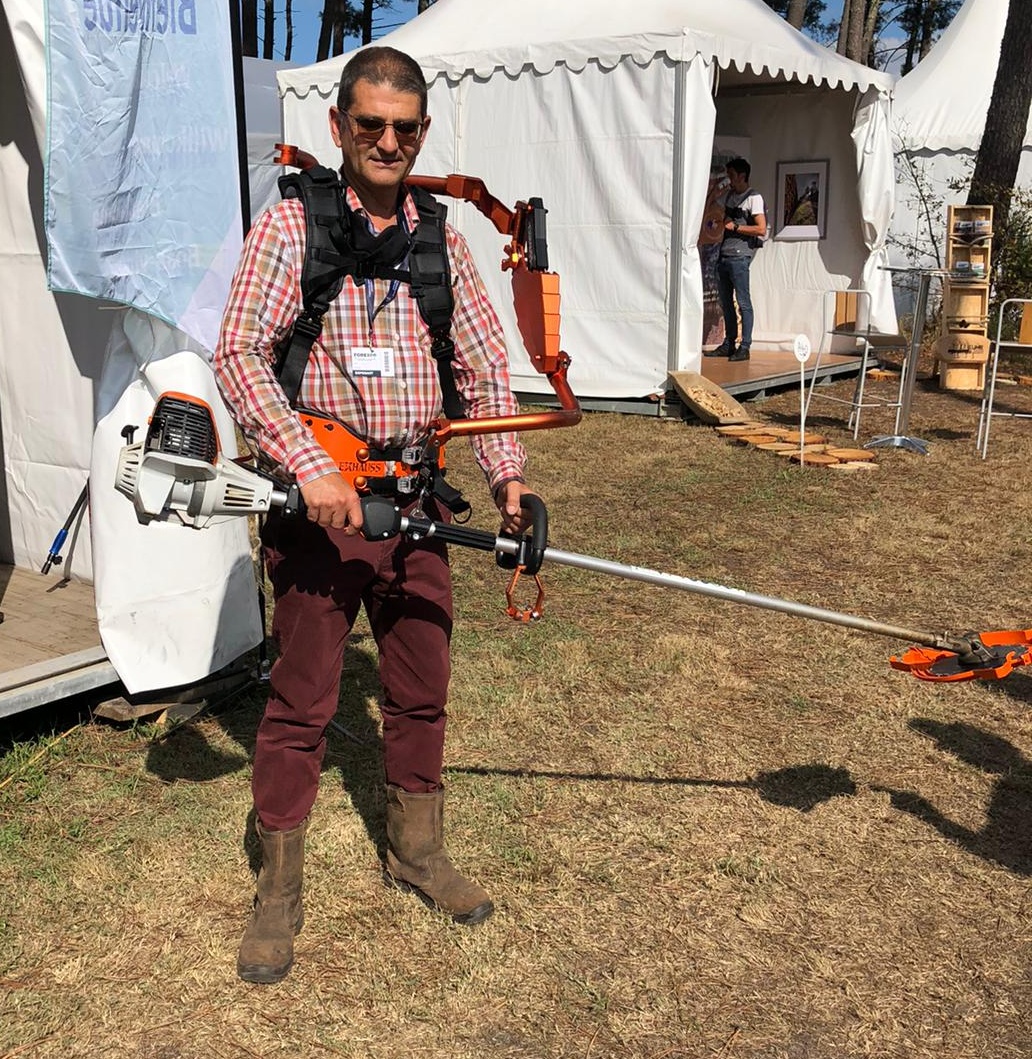
Visuel supplémentaire 1
Visuel supplémentaire 2
BP - Rosewood - V1
NO
Pays d'origine
France
Echelle d'application
Projet sous lequel cette fiche d'information a été créée
A la vidéo
yes